

How to Choose the Right Neighborhood in Wyoming
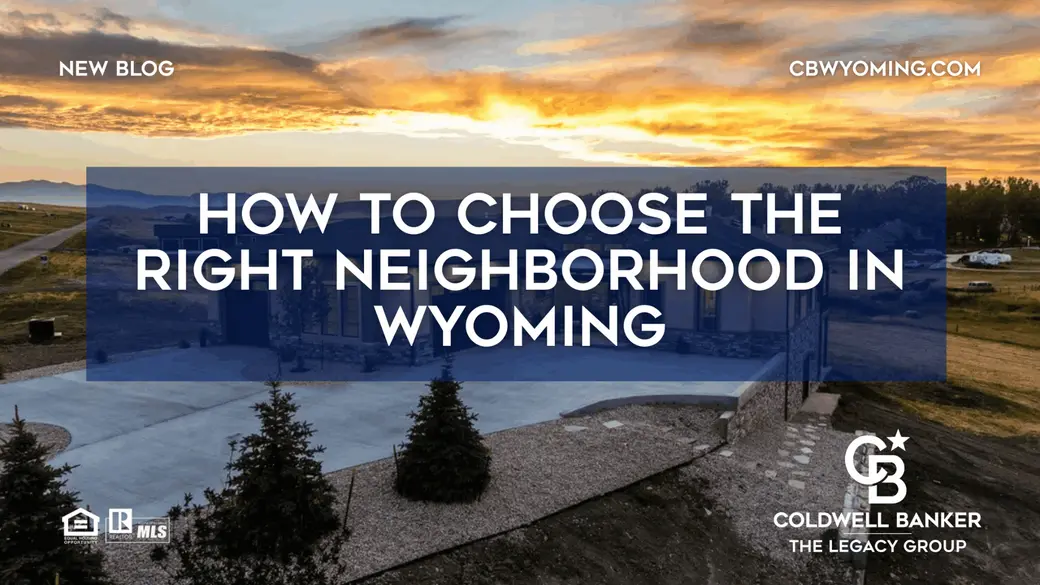
How to Choose the Right Neighborhood in Wyoming
Selecting the right neighborhood is a crucial step in finding your ideal Wyoming home. With communities ranging from historic small towns to sprawling ranch properties, Wyoming offers diverse lifestyle options. Whether you’re looking in Sheridan, Casper, Buffalo, or one of the many charming rural towns, you’ll want to ensure your new neighborhood fits your lifestyle, commute needs, and long-term goals. The following guide will help you evaluate Wyoming neighborhoods based on objective factors like amenities, schools, and property values – all while staying compliant with fair housing guidelines (focusing on features of the area, not the people who live there).
Lifestyle and Community Vibe
Begin by considering your lifestyle and the community atmosphere you prefer. Are you drawn to a lively, walkable downtown with shops and cultural events, or do you crave the peace of a quiet country setting? As one real estate expert advises: “You cannot move the home... So you have to pick an area first. If you don’t love the area that you’re in, there’s nothing you can do to change that.” —Jen Ortman. In other words, choose a neighborhood that matches your daily life and hobbies. For example, Wyoming’s neighborhoods run the gamut from vibrant city centers to secluded mountain hamlets. If you enjoy dining out, nightlife, or community events, you might prefer a town center or historic downtown area. If you value acreage, horses, and mountain views, a rural community on the outskirts could be ideal. Take note of the community vibe: some neighborhoods have a family-oriented, close-knit feel while others cater to an active outdoor lifestyle or a quiet retirement pace (all of which are perfectly valid choices under fair housing as long as you determine your personal needs).
Amenities are a big part of lifestyle fit. Look into what each neighborhood offers in terms of parks, libraries, restaurants, shopping, and healthcare facilities. Does the area have grocery stores and markets nearby? Are there hospitals or clinics within a comfortable distance? If you love the arts or social activities, check for theaters, museums, or community centers. In Wyoming, even smaller towns like Sheridan boast rich cultural amenities – from the historic WYO Theater to annual events like the Sheridan WYO Rodeo – while more rural areas may trade convenient services for open space and scenery. Make sure the neighborhood’s amenities (or lack thereof) align with what you consider essential for your lifestyle.
Location and Commute
Commute and accessibility are practical factors that can greatly affect daily life. Consider how far you’ll need to travel for work, school, or frequent activities. Wyoming’s wide-open spaces are part of its charm, but that can mean longer drives between home, work, and errands. If you’ll be working in a city like Casper or Sheridan, evaluate neighborhoods by their distance to major roads or highways and typical commute times. Living just outside of town might offer more land and tranquility, but be realistic about winter travel on Wyoming’s roads and the time spent driving. On the other hand, if you work remotely or in-town, you might prioritize a home near coffee shops and co-working spaces. Also think about walkability and transit – Wyoming is mostly car-dependent, but certain areas (like downtown Sheridan or central Casper) are more walkable and bike-friendly than others. Choose a location that balances your desire for space with a reasonable commute and access to daily necessities.
Schools and Education
For homebuyers with current or future children – or even those who simply value strong education infrastructure for resale value – researching schools in the area is key. Look at the local school district’s reputation, test scores, and extracurricular offerings. Keep in mind that under Fair Housing laws, real estate agents can’t steer you based on schools or say whether a school is “good” or “bad,” but you can objectively research factors like student–teacher ratios and state rankings on your own. Resources like GreatSchools or the Wyoming Department of Education can provide data on school performance. Also consider proximity to parks, playgrounds, and community programs for youth. In many Wyoming communities, schools are a point of pride – for instance, Sheridan offers highly rated public schools and community-based youth programs that make the area attractive for families. Even if you don’t have kids, neighborhoods near well-regarded schools often hold their property values well (since other buyers may be looking for that in the future). Visit the schools if possible, or speak to local parents, to get a feel for the education environment and community involvement. Just remember to focus on the quality of educational resources, not who attends them, to keep your assessment both fair and useful.
Amenities and Services
Beyond the lifestyle vibe, take a close look at the amenities and services available in each neighborhood. This includes shopping and dining options, recreational facilities, medical services, and civic resources. How close is the nearest grocery store or supermarket? Do you have choices for restaurants or cafes for an evening out? If you’re an outdoor enthusiast, are there trails, parks, or sports facilities nearby? Wyoming towns vary in this regard – a larger city like Casper will have big retail stores and perhaps a mall, whereas a smaller town like Buffalo or Ranchester might have only local boutiques and a few eateries. Sheridan, for example, offers a mix: a quaint Main Street with boutique shops and western apparel stores, but also big-box stores and chain restaurants on its outskirts for convenience. Think about what you need close by for comfort. If you require frequent medical care or just value peace of mind, check the distance to the nearest hospital or clinic. Likewise, if you travel often, consider the drive to the nearest airport (Casper and Sheridan have regional airports, while major flights might route through Denver or Billings). Ultimately, a “right” neighborhood should have accessible services that support your daily life and wellbeing.
Safety and Crime Rates
Everyone wants to feel secure at home, so safety is naturally a consideration. Researching crime rates and safety data for a neighborhood is a wise step – and it can be done using objective, factual sources. Look up local crime statistics through city police department websites or resources like CrimeReports. Keep in mind that even in generally safe Wyoming, crime can vary by area. Pay attention to trends: are incidents mostly minor or more serious? Is the crime rate going up or down? Visiting a neighborhood at different times can also give insight – do you feel comfortable walking there in the evening? Are the streets well-lit and maintained? Talk to potential neighbors if you have the opportunity; often residents can provide perspective on community watch programs or any concerns. Future development can also impact safety and quality of life. For example, new infrastructure (like better lighting, sidewalks, or traffic calming measures) might be planned in growing neighborhoods. Checking city or county development plans can reveal whether improvements or big changes (new roads, commercial centers, etc.) are on the horizon. The goal is to find a place where you feel safe and at ease. Remember to discuss only the data and features of the area – not the types of people who live there – to keep your search fair and in line with housing laws. Fortunately, factors like low crime stats, good street lighting, and a strong community patrol are all fair game to include in your neighborhood evaluation.
Property Values and Investment Potential
Buying a home is not just a personal milestone – it’s also a significant investment. Thus, it’s smart to evaluate a neighborhood’s property values and long-term investment potential. Research recent home sales in the area to gauge price ranges. Are home prices trending upward, staying steady, or declining? A neighborhood with rising values and new development may indicate a strong investment (though possibly higher up-front cost), whereas a more stagnant market might offer bargains but less appreciation over time. Wyoming’s real estate market has generally been steady, but each community is different. For instance, Sheridan’s median home price in 2025 was around $400,000, reflecting a mix of historic homes and new builds, and there’s increasing interest in properties with acreage as more buyers seek an outdoor lifestyle. By contrast, Casper or Cheyenne might have different trends. Look at how long homes stay on the market (an indicator of demand) and whether there are new housing developments or businesses moving into the area, which can boost future values. Also factor in property taxes and any HOA (Homeowners Association) fees, since these affect the cost of ownership and can vary widely by location. Wyoming generally has low property taxes, but they do differ by county. A neighborhood’s long-term potential isn’t just about monetary value, either – consider the plans for the community. Is there infrastructure being built (parks, schools, highways) that will make living there even better in 5-10 years? Balancing your personal budget with a home that will hold or grow its value is key. As real estate CEO Dean Jones put it, “Real estate is not just a transaction. It’s about understanding the value of what lies beneath the surface.” In other words, look beyond the price tag – consider the intrinsic value of the neighborhood and what future returns (financial and lifestyle) it might yield.
Visiting and Researching Firsthand
Paper research is invaluable, but nothing substitutes actually visiting a neighborhood. Once you have a few areas in mind, spend time on the ground. Visit at different times of day – a street that’s quiet on Sunday morning might be very busy during weekday rush hour or noisy on a Saturday night. Walk or drive through the neighborhood and observe: Are the homes and lawns well-maintained? Do people greet each other outside? How is traffic and parking? If possible, attend a community event, farmers’ market, or block party to mingle with locals. Wyoming towns are known for their friendliness, so don’t be shy about striking up conversations – ask how they like living in the area or if there are any neighborhood issues to be aware of. Take notes on what you see, hear, and feel; these qualitative impressions are just as important as statistics. Also consider doing a test commute: drive from the prospective neighborhood to your workplace during rush hour to see what it’s really like. If you have specific lifestyle needs (like you love stargazing and want minimal light pollution, or you must have high-speed internet for remote work), a firsthand visit can help confirm if the neighborhood meets those needs. Many homebuyers even rent for a short period in a new town or spend a weekend there before committing to buy, just to experience daily life. By immersing yourself briefly in the neighborhood, you can better imagine whether it feels like “home” to you.
Leverage Community Guides and Local Expertise
As you research, remember that you don’t have to do it all alone. Take advantage of community guides and local expertise – especially resources offered by reputable real estate professionals. Coldwell Banker The Legacy Group (based in Wyoming) provides detailed community profiles and neighborhood guides on their website to help buyers get insider insight. For example, their team has published guides like “Vibes and Highlights of All of Casper’s Neighborhoods” and “Sheridan WY Neighborhood Vibes & Community Highlights”, which break down the character of different areas. These guides often include information on local schools, parks, events, and even market trends for each part of town. Browsing such content can quickly give you a sense of which neighborhoods might suit your preferences.
In addition to online guides, consider talking to a local real estate agent who knows the area well. A seasoned agent can share personal insights that stats won’t show – maybe one subdivision is known for its tight-knit neighborhood BBQs, while another is beloved for its access to a new hiking trail. They can also help ensure you consider all the objective factors in your decision. As real estate coaches often note, a home purchase isn’t just about the house, but also about joining a community. Brian Buffini, a nationally recognized real estate mentor, emphasizes that owning a home goes beyond financial gain – it also “enhances personal well-being, builds stronger families and promotes solid communities.” In that spirit, a good agent will help you evaluate how a neighborhood might enrich your life, not just fit your budget. Don’t hesitate to reach out to the Coldwell Banker The Legacy Group team for advice – their agents live and work in these Wyoming communities and can offer firsthand knowledge. (You can even use our convenient property search tool or browse the Wyoming Locations pages for Sheridan, Casper, Buffalo, and more to explore listings by area.)
Sheridan and Surrounding Towns: Lifestyle Options in Action
To see how these factors come together, let’s look at Sheridan and its surrounding towns as examples. This region in northern Wyoming offers a microcosm of the state’s neighborhood diversity. Depending on your lifestyle priorities, one of these locales might be a perfect match:
-
Historic Downtown Sheridan – If you love a walkable, culture-rich environment, Sheridan’s downtown could be ideal. Centered on a vibrant Main Street, it features boutique shops, art galleries, cozy cafes, and frequent community events, all wrapped in authentic Western charm. You’ll have the WYO Theater and local restaurants at your doorstep, plus events like Third Thursday street festivals. Downtown living in Sheridan appeals to those who want convenience and a lively community vibe in a small-town package.
-
Big Horn – Just a few miles south of Sheridan, the Big Horn area offers a taste of luxury and scenic tranquility. It’s known for upscale homes and ranch-style properties on larger lots. Here you can wake up to mountain views and enjoy ample privacy. Big Horn is also home to The Powder Horn golf community – a master-planned golf and residential development consistently rated among the top communities for retirement and recreation in the region. Living in Big Horn gives you a peaceful rural feel, with Sheridan’s amenities still within a short drive. It’s perfect if you’re seeking acreage, equestrian facilities, or simply more elbow room without sacrificing proximity to town.
-
Ranchester & Dayton – These small towns northwest of Sheridan provide a family-friendly, suburban atmosphere. With good schools and parks, plus their own little downtowns, Ranchester and Dayton are popular with those who want a tight-knit community just outside the “big city” of Sheridan. Both have seen new home developments in recent years, offering modern homes at a relatively affordable price point. You’ll find that neighbors here know each other, kids play in the cul-de-sacs, and it’s a quick, scenic drive along the Tongue River to reach Sheridan for work or shopping.
-
Story – Tucked in the pine forests at the base of the Bighorn Mountains, Story is a mountain retreat community about 20 minutes from Sheridan. It’s a quiet hamlet famous for its cabin-style homes and a true outdoorsy lifestyle. Here, hiking trails, fishing spots, and even cross-country skiing in winter are right at your fingertips. Story has a small year-round population that swells a bit in summer with vacationers. It’s ideal if your dream neighborhood is less of a “neighborhood” and more of a tranquil woodland hideaway with a strong sense of nature and solitude. You won’t find big stores or schools in Story (kids commute to Sheridan or nearby districts), but you will find crisp mountain air, wildlife, and peace.
Each of these areas around Sheridan illustrates how location influences lifestyle. By weighing what matters most to you – nightlife or stargazing, golf or gardening, community BBQs or solitude – you can narrow down which Wyoming neighborhood best matches your vision.
(Interested in other Wyoming communities? Check out Coldwell Banker’s in-depth guides for places like Casper and Buffalo, or explore current listings by town on our website. Each town in Wyoming has its own flavor and opportunities, from Casper’s blend of urban convenience and outdoor adventure to Buffalo’s historic downtown and mountain backdrop.)
Making Your Decision (and Keeping Fair Housing in Mind)
Ultimately, choosing the right neighborhood in Wyoming comes down to balancing factual research with personal priorities. Use the tips above to create a checklist: Does the neighborhood fit your lifestyle? Is the commute workable? Do the amenities, schools, and safety meet your needs? Is it a wise investment for the long run? If a community checks those boxes, spend time there and trust your instincts on how it feels. When you’ve done your homework, you can move forward with confidence.
One more important note: throughout your search, remember to focus on objective criteria. All the factors we’ve discussed – location, features, stats, infrastructure – are fair game and help ensure you find a great home without veering into any Fair Housing pitfalls. By avoiding any judgments about the people in an area (and zeroing in only on the characteristics of the area itself), you’re not only following the law, but also keeping your decision free of biases that might steer you away from a hidden gem of a neighborhood. Every community in Wyoming has something to offer, so keep an open mind and evaluate each option on its merits.
As you weigh your options, don’t hesitate to lean on professionals for help. Coldwell Banker The Legacy Group in Sheridan is here as a resource – our agents can provide neighborhood-specific data, personal insights, and guidance tailored to your needs. We even have tools like community comparison charts and market trend reports to help you make an informed choice. After all, finding the right neighborhood is a team effort, and we’re passionate about matching people with communities they’ll love for years to come.
“Real estate is more than just property — it’s the opportunity to build legacies, one home at a time.” —Dean Jones, CEO of Sotheby’s Realty
Ready to start your search? Explore our community guides and property search page for the latest listings, or contact our friendly team for personalized help. With the right approach (and the right neighborhood), your Wyoming dream home is waiting – in a community that truly feels like home.
Categories
Recent Posts






GET MORE INFORMATION

Broker