

How 2026 Mortgage Rate Trends Affect Wyoming Buyers
by CBTLG
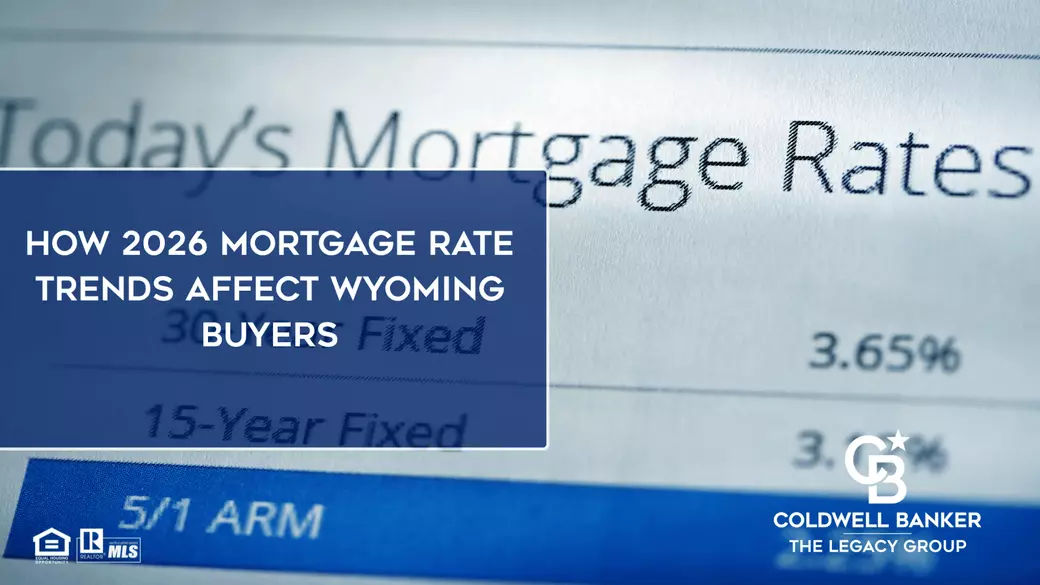
How 2026 Mortgage Rate Trends Affect Wyoming Buyers
Warm greetings from Buffalo, WY! If you’re a Wyoming homebuyer, you’ve likely noticed that mortgage rates took center stage in 2025. After several years of roller-coaster interest rates, understanding where rates are now – and where they might be headed – is crucial for making smart home-buying decisions. In this article, we’ll break down 2025’s mortgage rate trends for 30-year and 15-year loans (including VA and FHA programs), share expert insights from top real estate economists, and dive into Wyoming-specific data on home prices and affordability. Most importantly, we’ll explore how these interest rates affect your monthly payments and homebuying power, and offer practical tips (rate locks, buydowns, refinancing, and loan programs) to help you navigate the market confidently. All advice here is presented in a warm, professional tone reflective of Coldwell Banker The Legacy Group – Buffalo, WY, and complies with Fair Housing guidelines.
2026 Mortgage Rate Trends: A “New Normal” for Interest Rates
Mortgage rates remained elevated in 2025, though they eased slightly from their peak. At the start of 2025, the average 30-year fixed rate hovered around 7%, a level that had pushed many buyers to the sidelines. However, by late 2025, rates pulled back toward 6% – a relief, though still far above the sub-3% rates seen during 2020-2021. In fact, the 30-year fixed mortgage averaged ~6.16% in early January 2026 (barely changed from late 2025), down from about 6.93% a year prior. This downward trend in late 2025 gave borrowers a glimmer of hope. 15-year fixed mortgages followed a similar pattern: by the end of 2025, 15-year rates had improved to the mid-5% range after starting the year above 6%. Shorter-term loans typically run about 0.5–1% lower than 30-year loans, making them appealing for those able to handle higher monthly payments.
Government-backed loan programs offered slightly lower rates on average. FHA (Federal Housing Administration) and VA (Department of Veterans Affairs) loans often come with reduced rates or more lenient terms, thanks to government backing. By December 2025, the average 30-year FHA mortgage rate was around 5.99%, and the 30-year VA loan averaged even lower at approximately 5.83%. These programs provided a small edge for qualified buyers (VA loans, for instance, have no down payment requirement for veterans and typically no private mortgage insurance). Meanwhile, conventional 15-year fixed loans were roughly 5.4–5.5% at year’s end. Overall, 2025 did not bring the steep rate drops home shoppers had hoped for – instead, it introduced what many experts call a “new normal” of mid-6% rates.
Expert Insights: What Economists and Advisors Say
Top real estate experts closely tracked these rate trends and adjusted their forecasts. Lawrence Yun, Chief Economist of the National Association of REALTORS®, noted that while everyone wished for a return to ultra-low rates, it’s wiser to expect only moderate declines going forward. “Let’s not try to anticipate 3%, 4% or 5% mortgage rates,” Yun cautioned during a 2025 outlook broadcast. “The new normal would be around 6%.” In other words, buyers shouldn’t hold their breath for those pandemic-era bargains; a 30-year rate in the low-6% range may feel like a “deal” relative to the 7% levels seen in 2023-2024.
Yun’s outlook, shared in a Brian Buffini “Bold Predictions 2025” broadcast, suggested only a gradual easing of rates. He did expect the Federal Reserve to cut interest rates in 2025 as inflation cools, but he clarified that Fed rate cuts don’t automatically translate into equivalent mortgage rate drops. Mortgage rates tend to follow the 10-year Treasury yield (driven by investor sentiment and economic forecasts) more closely than the Fed’s short-term rate. So, while Fed policy might help nudge mortgage rates down, Yun emphasized no guarantees of a rapid fall. In fact, Yun predicted 30-year rates hovering near mid-6% through late 2025 – a forecast that largely came true. By the latter half of 2025, average rates were about 6.4%, with further easing to ~6.1% anticipated for 2026.
Other industry voices echoed this cautiously optimistic tone. “Mortgage rates are the magic bullet for market recovery,” Yun remarked at a real estate forum, noting that a meaningful decline in rates would “stimulate activity”. High rates had been suppressing sales for months, but there was a sense that relief was on the horizon. Sam Khater, chief economist at Freddie Mac, reported that by early 2026 rates were at a 16-month low, and this had already led to “improving momentum in for-sale residential demand” with purchase applications up over 20% compared to a year earlier. In essence, experts agreed: 2025’s slight rate improvements were enough to rekindle some buyer interest, and any further drops (even into the mid-5% range) could significantly boost home-buying demand.
Wyoming Housing Market in 2026: Prices, Inventory and Affordability
How did these rate trends play out in Wyoming’s real estate market? In short, Wyoming saw record-high home prices in 2025, even as sales volume remained modest. In fact, Wyoming’s housing market led the nation in home value growth in 2025, with the statewide average home value reaching about $360,000, a 4.6% annual increase. (This average is above the U.S. national average, highlighting Wyoming’s strong market performance.) However, the combination of rising prices and higher borrowing costs made affordability a key concern. The state now ranks roughly 25th least affordable in the country, with an index score around 5.5 (where higher prices relative to incomes reduce affordability). In some areas, home values have climbed faster than local incomes, squeezing first-time and moderate-income buyers.
Regional differences are dramatic across the Equality State. For example, Casper – one of Wyoming’s major towns – saw its median home value hit about $320,000 (up 6.7% year-over-year). Casper remains relatively affordable and has attracted professionals seeking lower prices compared to hotspots like Jackson. Sheridan County’s median home price reached $442,500 by spring 2025 (a 6.8% annual rise), reflecting healthy growth. But interestingly, Sheridan also accumulated nearly 11 months of housing inventory in 2025. Such a high supply tipped Sheridan into a buyer’s market, meaning buyers there gained more negotiating power despite the price increases. Local agents noted that realistic pricing became crucial as buyers had more choices. Meanwhile, Jackson (Teton County) continued to live in its own world – luxury home demand kept the median price around $2.6 million, sustained by wealthy out-of-state buyers and limited inventory. This ultra-high-end segment skews Wyoming’s averages, but most local buyers are dealing with much lower price points.
To put Wyoming’s affordability challenge in perspective, consider the impact of those interest rates on a typical home: Even if you find a Wyoming home at the state’s median price (~$350k), financing, say, $320,000 of that at 6% interest results in a monthly payment around $2,227 – roughly $570 more per month than if you had the same loan at a 3% rate. That $570/month gap is real money for Wyoming families – over $6,800 extra per year in payments, which can easily strain a household budget. Lenders also factor this into what you can afford. Higher rates mean a larger share of your income goes toward interest rather than principal, so you may qualify for a smaller loan when rates are high. For example, one analysis showed that jumping from a 3% to a 6% mortgage could push a borrower’s debt-to-income ratio from a comfortable ~27% up to about 34%, potentially putting them at the edge of loan approval. In plain English: a house that was affordable at 3% might become unaffordable at 6%, strictly because of the interest cost – even if the home’s price hasn’t changed.
This affordability crunch in 2025 manifested in Wyoming’s sales and inventory numbers. Home prices kept climbing (the state’s average home value was up by mid-single-digits percentage-wise, as noted), but fewer buyers could pull the trigger. Sales of existing homes in Wyoming slowed, and many listings stayed on the market longer. In fact, as of late 2025, the number of homes sold statewide was down about 10% compared to the year prior, while the number of homes on the market was up ~11%, indicating that inventory was finally growing after years of shortage. For buyers, this was a silver lining: more inventory and longer days-on-market meant more negotiating leverage and choice than they’d had in the frenzied market of 2021. By the end of 2025, some Wyoming markets were seeing price reductions and seller concessions (like covering closing costs or paying for rate buydowns) to attract buyers. And indeed, as mortgage rates dipped late in the year, buyer demand perked up. Nationally, December 2025 home sales jumped 5% compared to November, the fastest sales pace in nearly three years, thanks to rates briefly hitting their lowest levels of the year. Wyoming’s market mirrored this trend: when financing got a tad cheaper, more locals decided to take the leap. This underscores a key point – interest rates and buyer demand are tightly linked in today’s market.
How Interest Rates Affect Monthly Payments and Buyer Demand
It’s clear that mortgage rates play a huge role in what Wyoming buyers can afford. Let’s break down the effects:
-
Monthly Payment Impact: As illustrated earlier, a higher interest rate can dramatically increase your monthly mortgage payment. For every $100,000 of mortgage, the jump from ~3% to ~6% interest adds roughly $170–$190 to the monthly payment. On a larger loan (e.g. $300K–$400K), that translates to hundreds of dollars more per month. This extra cost isn’t just theoretical – it directly hits your wallet every month. Over the life of a 30-year loan, even a 1% rate increase can mean tens of thousands of dollars in additional interest paid. In short, higher rates make owning a home significantly more expensive on a month-to-month basis, which is how most of us budget. For Wyoming buyers on the edge of their price range, that can be the difference between comfortably affording a home versus feeling stretched too thin.
-
Home Affordability & Loan Size: Lenders approve your mortgage amount based on what monthly payment you can manage relative to your income (this is your debt-to-income ratio). When interest rates rise, that monthly payment for a given loan amount also rises. The result is that many buyers qualify for smaller loans at 6–7% rates than they would at 3–4%. For example, if a $2,000/month principal-and-interest payment could get you a $400,000 loan at a low rate, that same $2,000 might only support a loan in the $300,000s at today’s higher rates. Thus, buyers in 2025 often had to adjust their price range downward or increase their down payments to keep payments affordable. As Experian noted, a loan that was comfortably within budget at 3% could become borderline (or even denied by underwriting) at 6% because the payment would consume too much of the borrower’s income. This shrinking of buying power meant some house hunters in Wyoming had to aim for cheaper homes or save up longer.
-
Buyer Demand and Market Activity: High rates don’t just squeeze individual budgets – they also cool off buyer demand across the market. In 2025, as 30-year mortgages floated around 7% for much of the year, many would-be buyers hit the pause button on home searches. We saw existing-home sales slump to near 30-year lows nationally, and locally many sellers saw fewer showings and offers. But here’s the flip side: whenever rates showed a sustained dip, buyer activity picked up noticeably. Lawrence Yun described mortgage rates as the key that can “unlock” the market – and late 2025 proved this. When average rates fell into the low-6% range by year’s end, purchase mortgage applications jumped and home sales ticked upward. In fact, Freddie Mac’s data showed that demand was very responsive to rate changes: with rates about 0.7 percentage points lower than a year before, there were ~20% more loan applications from buyers than the previous year. This pent-up demand suggests a lot of Wyoming buyers are waiting in the wings; as soon as financing becomes a bit more affordable, they’re ready to move. We also saw sellers adjust to this rate-driven reality – by offering incentives like price cuts or paying points on behalf of the buyer – to help deals go through (more on that below). The bottom line is, interest rates heavily influence buyer psychology. When rates are high, many buyers feel discouraged or get priced out; when rates improve, affordability increases and folks feel more confident about entering the market.
Strategies for Wyoming Buyers Navigating High-Rate Times
Even with 2025’s challenging rates, Wyoming homebuyers can still succeed – it just takes smart strategy. Here are some practical tips to help secure a home despite higher interest costs:
-
Lock In Your Rate (At the Right Time): Mortgage rates can be a moving target – they often fluctuate daily or weekly with economic news. Once you’ve found a home and have an accepted offer, consider locking in your interest rate with your lender. A rate lock guarantees today’s rate for a set period (typically 30–60 days) while you close on the house. This protects you from any sudden rate spikes before you finalize the loan. In a volatile market, a rate lock is valuable peace of mind. If forecasts suggest rates might rise soon, locking early is wise. On the other hand, if rates are steadily trending down, you might choose a shorter lock or ask about a float-down option (some lenders allow one rate adjustment if market rates drop during the lock period). The key is to work closely with your lender on timing. For most Wyoming buyers in 2025, locking as soon as you’re under contract was a common strategy – it eliminated the risk of your monthly payment jumping before closing. Remember, even a 0.25% increase in rate can nudge your payment up, so locking removes that uncertainty.
-
Explore Mortgage Rate Buydowns: Rate buydowns became a buzzword in 2025. This is a tactic to get a lower interest rate by paying extra money up front or negotiating concessions. One popular version is the “2-1 buydown”. In a 2-1 buydown, someone (seller, builder, or even the buyer) prepays a portion of interest so that your rate is 2% lower in year 1, 1% lower in year 2, and then it returns to the normal rate in year 3. For example, if your loan is at 6.5%, you’d only pay 4.5% that first year, 5.5% the second, and 6.5% thereafter. This can save you hundreds per month initially, giving you breathing room as you adjust to homeownership. Many sellers in Wyoming – especially home builders and those in softer markets like Sheridan – offered buydowns or paid discount points for buyers in 2025. In fact, by late 2025 nearly two-thirds of home builders were providing incentives such as rate buydowns to attract buyers. If you’re struggling with the monthly payment at current rates, don’t be shy about asking for a seller-paid buydown as part of your offer. Sellers were more open to such concessions in 2025’s cooler market. Alternatively, you as the buyer can opt to buy discount points yourself – essentially paying an upfront fee to permanently reduce the interest rate on your loan. This works best if you plan to stay in the home for a long time; you’ll need to crunch the numbers (or have your lender do it) to see if the up-front cost pays off over time with the lower payment. Tip: If you do negotiate a temporary buydown (like a 2-1), have a plan for when the rate steps up. Maybe you’ll have a raise or other debts paid off by then – or you might plan to refinance before the higher rate kicks in.
-
“Marry the House, Date the Rate” (Refinance Later): This catchy phrase made the rounds in 2025, and it carries some truth. The idea is that if you find a house you love and can afford the current payment, it may still make sense to buy now – even at a higher rate – because you can always refinance if and when rates come down in the future. You’re “marrying” the home (a long-term commitment), but only “dating” the mortgage rate (you can break up with that rate when a better one comes along!). Historically, interest rates tend to move in cycles, so there’s a decent chance that within a couple of years, there could be an opportunity to refinance into a lower rate. 2025’s buyers are already poised to do this if 2026 brings rate relief. Many lenders introduced special programs to make future refinancing easier or cheaper for recent buyers. For example, one program in late 2024–2025 (Rocket Mortgage’s “Rate Drop Advantage”) allowed buyers to refinance with reduced or no closing costs if rates fell within 18 months after their purchase. This kind of offer underscores that even lenders expect folks to refinance as rates drop. Important: Refinancing isn’t guaranteed – it depends on market rates and your personal financial situation at the time – but it’s a valuable option to keep in mind. If you do buy at 6-7% now and rates fall to, say, 5% in 2026, refinancing could slash your monthly payment and total interest. In the meantime, you haven’t missed out on a home you love or any price appreciation that occurs. So, many Wyoming buyers in 2025 took the approach: buy the home now, and plan to refinance later if the opportunity arises. Just be sure you can afford the current payment and aren’t stretching your budget on the hope of a refinance. Think of a refi as a bonus, not a necessity, and you’ll be in good shape.
-
Shop Your Loan Programs (and Assistance Options): Not all mortgages are created equal. Especially in a higher-rate environment, it pays to explore different loan programs that might offer lower rates or lower monthly payments. If you’re a veteran or active-duty military (or surviving spouse), definitely look into a VA loan – VA mortgages require 0% down in many cases and often have rates ~0.25–0.5% lower than comparable conventional loans. (For context, VA 30-year rates were averaging around 5.8% in late 2025.) For other buyers, an FHA loan might be attractive: FHA allows as little as 3.5% down and has more lenient credit requirements than conventional loans, which can help you qualify. FHA rates can be slightly lower than conventional as well (around 5.99% on average at the end of 2025), though remember you’ll pay mortgage insurance premiums. USDA loans are another fantastic option in Wyoming – these are 0% down loans for homes in designated rural areas (and much of Wyoming outside the big towns qualifies). USDA rates are also competitive and can be on par with FHA. In 2025’s market, buyers also increasingly took advantage of first-time homebuyer programs and down payment assistance. With sellers more willing to accept offers involving these programs (in a hot seller’s market, that wasn’t always the case), you might secure grants or loans that help cover down payments or buy down your rate. Always check Wyoming-specific programs like those from the Wyoming Community Development Authority (WCDA) or local nonprofits – they can offer special low-interest loans or assistance for qualifying buyers. The big picture here is: talk to a knowledgeable lender about your situation. Compare a 30-year fixed versus a 15-year (the 15-year has a lower rate, which might save interest if you can swing the higher payments). Ask about adjustable-rate mortgages (ARMs) as well – in 2025 some ARMs started with rates in the 5% range, which could be helpful if you only plan to own the home for 5-7 years or expect to refinance before any rate adjustments. By being open to different financing options, you might find a loan that fits your needs better and costs you less in this high-rate environment.
Finally, remember that knowledgeable professionals are your ally. Don’t hesitate to connect with a trusted agent who understands the Wyoming market dynamics. The right real estate agent can help you strategize in negotiations – for example, asking a seller to contribute to closing costs or rate buydowns, which was a common practice in 2025. They can also guide you to reputable local lenders who offer the programs mentioned above. Similarly, a good loan officer will analyze your financial situation and suggest creative solutions (maybe a temporary buydown, a piggyback loan to avoid some mortgage insurance, etc.). In a market that’s shifting, professional advice is invaluable. Our Coldwell Banker The Legacy Group team in Buffalo, WY prides itself on providing this kind of guidance so you can make informed decisions every step of the way. Be sure to explore Wyoming mortgage options with professionals who can tailor a plan for you.
By staying informed and proactive, Wyoming buyers can navigate the 2025 mortgage landscape and turn challenges into opportunities. High rates may require some adjustments – perhaps a bit more creativity in financing or patience in home shopping – but they don’t have to derail your homeownership dreams. Wyoming’s real estate market is still full of promise: rising inventory and moderating prices in some areas are opening doors for buyers who were once crowded out. So keep an eye on interest rate trends, use the strategies above, and lean on trusted local experts. With the right approach, you can find the right home at the right price – and secure a mortgage that works for you today, with options to improve tomorrow. Happy home hunting!
Fair Housing Act Compliance
This article adheres to all Fair Housing Act guidelines and regulations. All information provided is focused on financial trends, market data, and general homebuying strategies that apply equally to any reader. We avoid any mention of protected classes or personal characteristics, and we make no guarantees or promises – instead, we offer objective insights and tips. Our goal is to inform and empower all Wyoming homebuyers in a non-discriminatory, inclusive manner. Equal housing opportunity is a fundamental principle we uphold in both our advice and our services.
Categories
Recent Posts


GET MORE INFORMATION

Broker